



UniGraz@Museum
The UniGraz@Museum’s permanent exhibition features the world’s largest digital book, the world’s longest wave machine, and objects illustrating the development of physics research: from a marine chronometer and Austria’s oldest surviving laser apparatus to a tunnelling microscope that operates entirely without light or optical lenses. The exhibition also provides insights into scientific ethics.
---------------------------------------
Guided tours are available during regular opening hours (Monday 10.00–15.00, Wednesday and Friday 10.00–13.00) without prior booking. Guided tours outside these times are available on other weekdays by prior booking only (on weekdays via: franz.stangl(at)uni-graz.at).
Every Monday at 10.00, there is also a guided tour at the UniGraz@Museum, which can be attended without prior booking.
The current temporary exhibition at the University Museums of the University of Graz, entitled “Experiencing Democracy. Your Voice. Your Vote. Your Future…”, invites you to take a critical look at the history and present state of democracy.
It offers insights into the very beginnings of the concept of democracy in ancient Greece, as well as the revival of this idea in the early modern period and its subsequent development right up to the present day.
---------------------------------------------
Guided tours are available during regular opening hours (Monday 10.00–15.00, Wednesday and Friday 10.00–13.00) without prior booking. Guided tours outside these times are available on other weekdays by prior booking only (on weekdays: franz.stangl(at)uni-graz.at).
Every Monday at 10.00, there is also a guided tour at the UniGraz@Museum, which can be attended without prior booking.
To coincide with the current temporary exhibition ‘Experiencing Democracy. Your Voice. Your Vote. Your Future…’, this special guided tour focuses on women who have helped shape, influence and advance democracy – from Olympe de Gouges to Jina Mahsa Amini.
As early as 1791, Olympe de Gouges called for women’s equality in her ‘Declaration of the Rights of Woman and the Female Citizen’, at a time when political participation was almost exclusively reserved for men.
Jina Mahsa Amini, by contrast, represents current struggles for freedom, self-determination and human rights. Her death sparked a global protest movement in which women, in particular, stood up for their rights, their bodies and their participation in society.
In this way, the guided tour bridges the gap between the past and the future: it highlights how historical demands for equality continue to resonate in the present day and the significance women continue to hold for the further development of democratic societies.
---------------------------------------------
The UniGraz@Museum’s regular opening hours are Monday 10:00–15:00 and Wednesday and Friday 10:00–13:00.
Flexible guided tours, including outside these times, are available exclusively by prior booking at franz.stangl(at)uni-graz.at.
Hans Gross Kriminalmuseum
Drawing on the exhibits at the Graz Crime Museum, which was founded in 1895 by Hans Gross, the general guided tour recounts the history of the Graz School of Criminology, including a selection of case histories that have been reconstructed from the case files relating to the objects on display. Also on display are artefacts from the history of criminalistics, such as the first evidence collection kit (‘Tatortkoffer’).
-------------------------------------------------------
The regular opening hours of the Hans Gross Crime Museum are Mondays 10:00–15:00 and Thursdays 13:00–17:00.
Every Monday at 11.00, a general guided tour of the permanent exhibition at the Hans Gross Crime Museum takes place, which can be attended without prior booking. Flexible guided tours, including outside these times, are available exclusively by prior booking at kriminalmuseum(at)uni-graz.at or stefan.koechel(at)uni-graz.at.
For those with a keen interest in the history of science, a special guided tour entitled ‘History of Criminal Science’ can also be booked, which examines the Graz School of Criminal Science within a broader historical and international context. Instead of case studies, this tour therefore devotes more time to explaining aspects of legal history, criminology and forensic science.
-------------------------------------------------------
The regular opening hours of the Hans Gross Crime Museum are Mondays 10:00–15:00 and Thursdays 13:00–17:00.
Flexible guided tours, including those outside these times, are available exclusively by prior arrangement via kriminalmuseum(at)uni-graz.at or stefan.koechel(at)uni-graz.at.
It is not only historical reflection that brings psychoanalysis very close to criminology. When considered systematically, formally and in terms of content, the discourse founded by Sigmund Freud proves, for the most part, to be distinctly criminological, so much so that attempts to integrate psychoanalysis into the field of criminology were already being made in the early 20th century. The special guided tour ‘Criminal Science & Psychoanalysis’ also sheds light on the family drama surrounding Hans Gross and his son Otto, a psychiatrist who, amongst other things, underwent treatment with Carl Gustav Jung in Zurich in 1908.
------------------------------------- ------------------
The regular opening hours of the Hans Gross Crime Museum are Mondays 10:00–15:00 and Thursdays 13:00–17:00.
Flexible guided tours, including outside these times, are available exclusively by prior arrangement via kriminalmuseum(at)uni-graz.at or stefan.koechel(at)uni-graz.at.
From a historical perspective, the emergence of criminology in the late 19th century was preceded by the development of the crime and detective novel genres; conversely, criminology was itself to exert an influence on literary history. The special guided tour ‘Criminology & Crime Fiction’ sets out to trace this reciprocal relationship and explains the thematic and technical connections.
-------------------------------------------------------
The regular opening hours of the Hans Gross Crime Museum are Mondays 10:00–15:00 and Thursdays 13:00–17:00.
Flexible guided tours, including outside these times, are available exclusively by prior arrangement via kriminalmuseum(at)uni-graz.at or stefan.koechel(at)uni-graz.at.
Our flexible campus tours
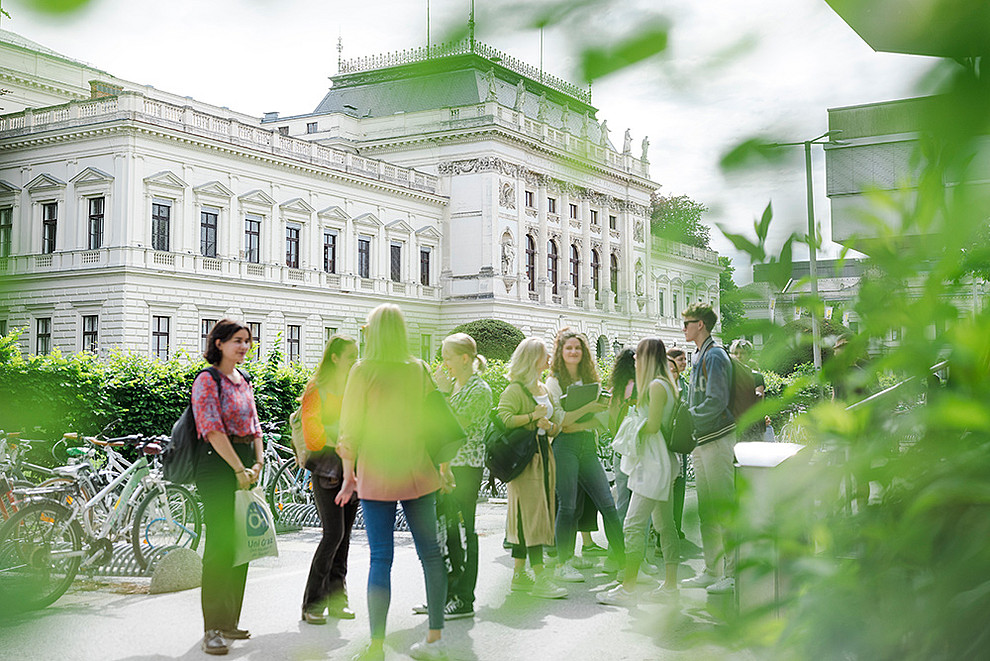
For some, it is and always will be a personal place of study to which they love to return. For others, it is and has always been a centre of research and a workplace: the University of Graz campus.
Situated in the heart of the city, in the leafy district of Geidorf, it has also developed into a dynamic living space with an international flair, where the past continues to keep pace with the challenges of the future.
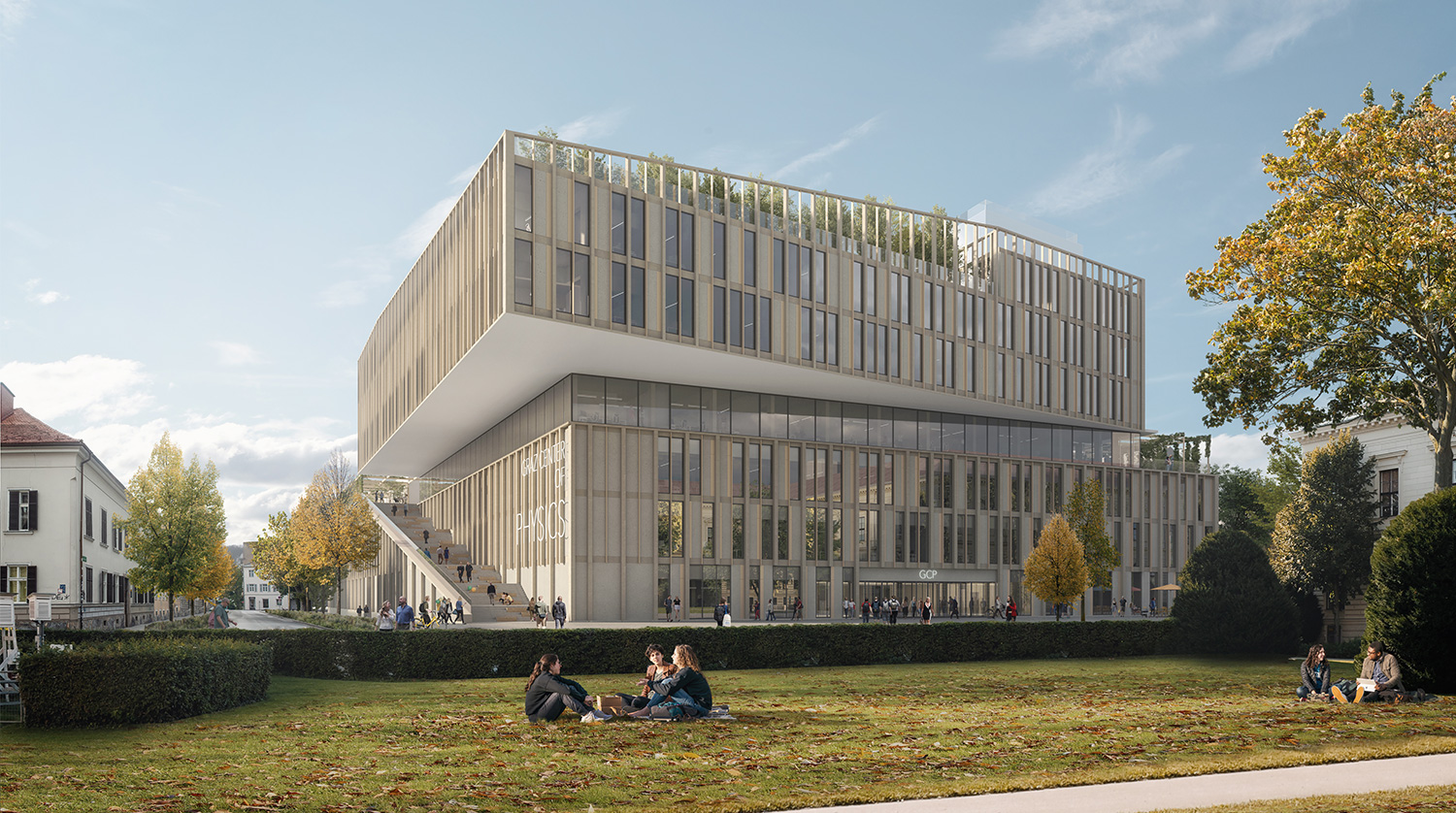
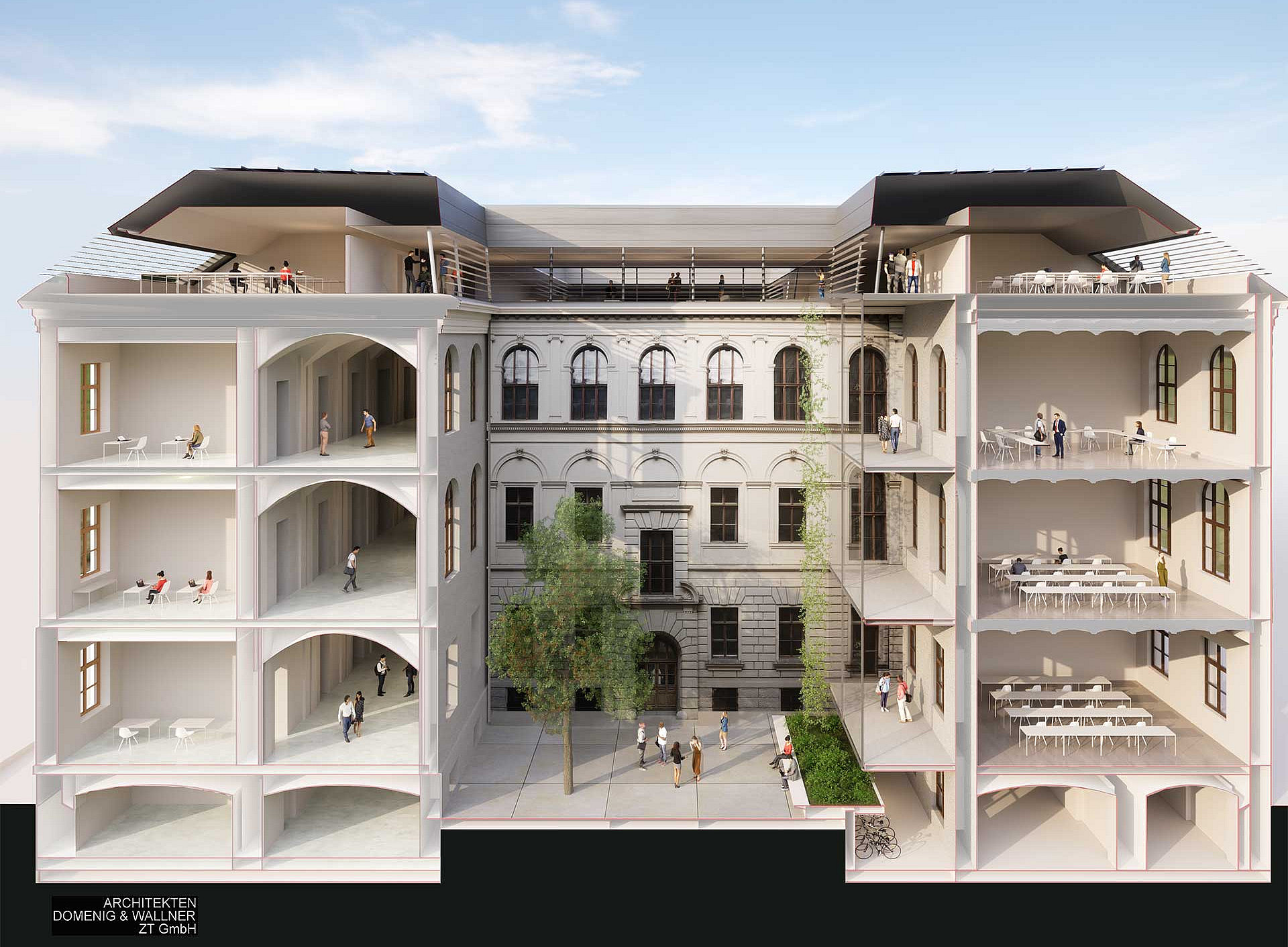
It is currently home to striking new buildings and refurbishments: the Graz Centre of Physics, the Haus der Bildungswissenschaften and the fully refurbished Jesuit Refectory.
Have we sparked your curiosity?
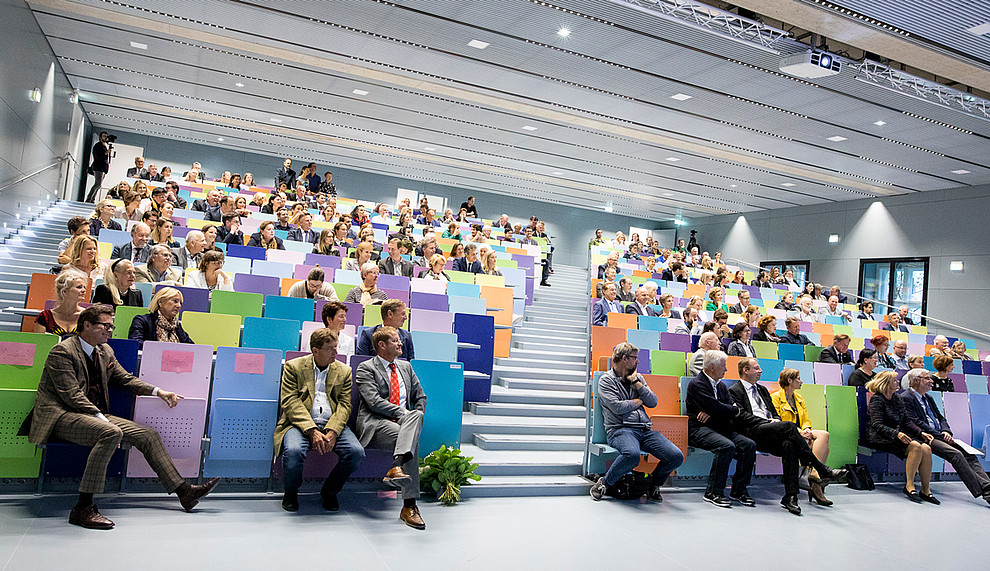
We’ll show you the architecturally and historically significant sites associated with numerous Nobel Prize winners and offer exclusive glimpses into the seminar rooms and lecture theatres used by the students and researchers of tomorrow.
We’ll guide you to hidden treasures that bear witness to the centuries-old history of the University of Graz and share a few exciting and interesting anecdotes along the way.
Target audience:
- Those interested in architecture and those who wish to become so
- Pupils in their final year of school
- Alumni gatherings
- Students
- National and international conference participants
- Staff at the University of Graz
If you are interested, please arrange an appointment with Mag. Franz Stangl. (Telephone: +43 316 380-7444; Email: franz.stangl(at)uni-graz.at)
The University Museums team looks forward to your visit!
Group with guided tour (min. 8 people): €5.00 per person
School class with guided tour: €3.00 per person